
You’re Breathing All Day — But Are You Breathing Well?
At Bowen College UK, our tutors bring far more than technical knowledge to their teaching. They draw on years of professional practice, personal experience and a genuine commitment to helping others live and work with greater confidence.
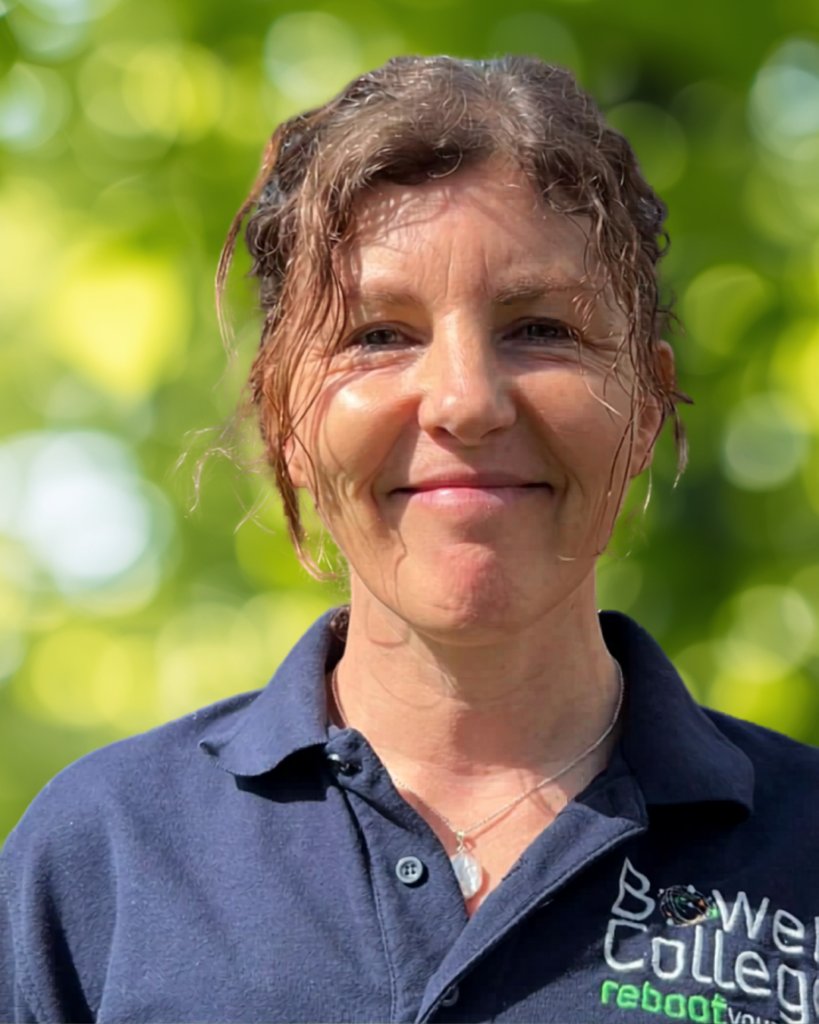
In this article, Bowen therapist, educator and breathing specialist Laura Van Tatenhove explores something most of us do around 20,000 times a day without giving it much thought.
She explains why the way we breathe matters, how unhelpful breathing habits can develop and why learning to notice our breath can be valuable for therapists and non-therapists alike.
If you’re anything like me, you’re looking for simple, effective and affordable ways to stay healthy.
Yet it can feel overwhelming trying to keep up with the latest advice about nutrition, exercise, sleep and wellbeing. Every week there seems to be a new study, a new trend or a new miracle cure claiming to be the answer.
But what if one of the most powerful tools for improving your health was already with you every moment of every day?
Your breath.
Breathing is something we do around 20,000 times a day.
It is the most essential function of life, yet for most of us it happens unconsciously, and we rarely give it much thought. Unlike so many health interventions, improving the way we breathe requires no equipment, no subscription and no expensive products. It is available to all of us, 24 hours a day.

Research continues to demonstrate that healthy breathing habits can help regulate the nervous system, improve cardiovascular and respiratory health, support better sleep, reduce anxiety, increase energy, enhance physical performance and contribute to overall wellbeing.
Yet despite its importance, many people unknowingly develop dysfunctional breathing habits that can affect their health. Poor breathing patterns may contribute to the severity of asthma, COPD, anxiety, ADHD, fatigue, sleep apnoea and other respiratory and cardiovascular conditions. As therapists, teachers or healthcare professionals, we also encounter these breathing patterns every day in our clients, patients and students.
My own interest in breathing developed over many years.
I smoked for almost fifteen years and experienced the effects on my health daily, while struggling to quit.
Later, I became fascinated by yoga and breath work, but it wasn’t until the COVID-19 pandemic that I took a deep dive into the anatomy and physiology of breathing. That experience transformed my understanding of how profoundly our everyday breathing habits influence our health.
It made me realise that functional breathing deserves the same attention as other everyday health habits. We teach children to brush their teeth and wash their hands because these simple routines protect long-term health. I believe learning how to breathe well should be viewed in much the same way.
As a Bowen practitioner, I have seen how breathing influences posture, movement, nervous system regulation and recovery.
This inspired me to create the Better Breathing for Better Health workshop. Because breathing influences so many aspects of health, I wanted to create a workshop that gives § practical skills they can use immediately, whether for themselves, their families or the people they support professionally. During the session we explore the science behind functional breathing, learn simple assessment techniques and practise exercises that participants can confidently take away into everyday life.
If you’d like to explore the topic in more depth, I’d love to welcome you to Better Breathing for Better Health.
This two and a half hour course is designed not only for individuals who want to improve their own health, but also for Bowen practitioners, therapists, healthcare professionals, teachers and anyone who wants the knowledge and confidence to help others develop healthier breathing habits.
During the workshop you’ll learn how to:
- Recognise common breathing pattern dysfunctions and simple ways to assess them.
- Understand the anatomy and physiology of breathing in a clear, practical and accessible way.
- Learn effective breathing exercises that can be incorporated into everyday life.
- Develop the confidence to explain and teach healthy breathing habits to clients, patients, family members or students.
Making the workshop accessible is important to me. That’s why it is delivered online in a relaxed two-and-a-half-hour format, allowing plenty of time for practical demonstrations, discussion and questions. You’ll also receive a recording of the session, a comprehensive PDF handout and supporting videos so you can continue practising and revisit the material whenever you need.
Whether you’re looking to improve your own wellbeing or support the health of others, learning to breathe well is one of the simplest and most valuable investments you can make. Sometimes the most powerful health resource really is right beneath your nose.