There is currently a lot of discussion in manual therapy about symmetry and asymmetry. Personally, I think this discussion risks missing the most important point.
If there is a problem somewhere in the organism, the body will adapt. And maybe not in the place you might expect to see it.
This adaptation can take place through muscles, joints, fascia, the nervous system, organs, connective tissue or many other systems. The body is constantly trying to maintain balance and preserve function. But, the body does not experience itself as seperate systems. This is an important point to realise.
As practitioners, we often see the result of these adaptations. We see an asymmetrical pelvis, a fixation in a joint, altered muscle tone, fascial restrictions or changes in posture. We then tend to focus our attention on these findings.
The question is whether we are looking at the cause or at the consequence.
With ESB we test for exactly this.
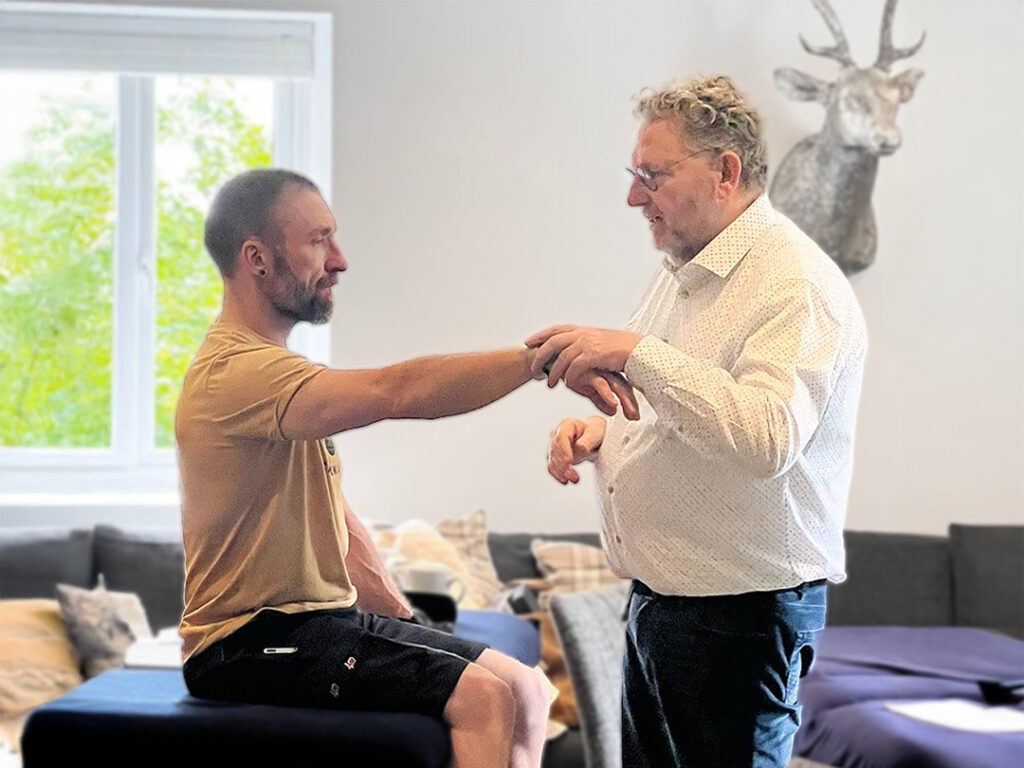
We test to find out. Not to treat the distinction we see.
Many practitioners assume that correcting the asymmetry will solve the problem. Sometimes this is true. When you perform a good structural correction, the body will often reset itself towards a more balanced state.
However, it is important to understand that adaptation and recovery are not the same thing.
A patient may adapt successfully to a problem without eliminating the original stressor. In fact, I would say that this is exactly what happens in many chronic conditions.
Once the body has made an adjustment, stiffness will occur somewhere else in the system. This may occur in a muscle, a joint, a fascia, a tendon, a ligament supporting an organ, the peritoneum, an organ or a gland.
The pain or discomfort may disappear, but this does not necessarily mean that the person has fully recovered.
You could put it this way:
Asymmetry indicates that the system has been under stress.
Symmetry indicates the state following the latest adjustment.
These are not the same thing.
The body is always trying to maintain homeostasis. Every adaptation is an attempt to preserve function. The problem is that adaptation often comes at the expense of optimal regulation.
Many patients function surprisingly well for years because they are very good at adapting. The difficulty arises when the organism gradually loses its ability to compensate. At that point we start seeing chronic conditions, persistent symptoms and a loss of resilience.
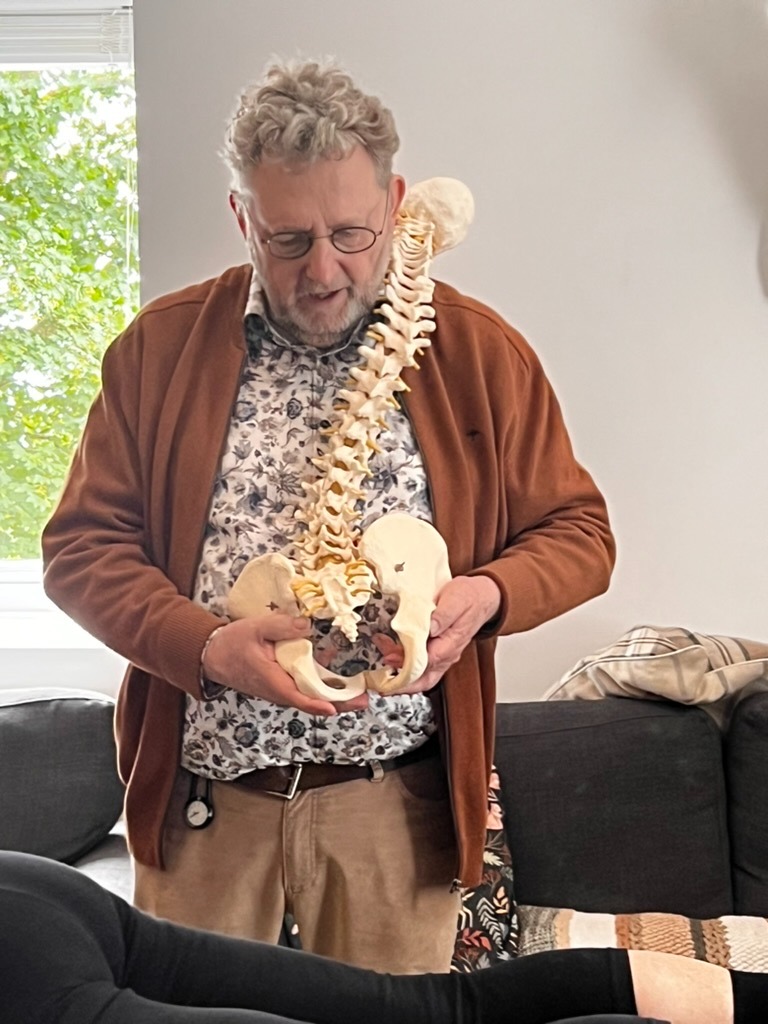
This is one of the reasons why I have become increasingly interested in the work of Professor Pischinger and the concept of the Grundsystem.
The loose connective tissue forms an enormous communication network throughout the body. It connects cells, organs, blood vessels, nerves, lymphatics and regulatory systems into a single functional whole.
In my view, one of the major challenges facing practitioners is understanding how this system changes over time. A patient may adapt successfully for years, but if the Grundsystem gradually loses tone and responsiveness, regulation becomes increasingly difficult.
This is why I believe it is important to look beyond structure alone.
Structure is important.
Muscles are important.
Joints are important.
Fascia is important.
But the organism consists of much more than these individual components.
The real challenge is understanding how all these systems work together and how they contribute to the body’s ability to regulate itself.
This question has become increasingly central to my own work and to the development of Energetic Structural Balance (ESB). Not simply how to correct an adaptation, but how to help the organism recover its capacity for self-regulation.
You can learn ESB with André this June
We have a unique opportunity to study ESB with it’s founder, André Dückers, starting on the 27th June in Devon. There are still a few places available, so sign up to discover a revolutionary approach to structural and energetic healing.
This 3-day hands-on training introduces the foundational techniques and principles of Energetic Structural Balance (ESB®) — a fast, gentle, and highly effective therapy that works with the body’s innate self-regulation mechanisms.
In the Level 1 training, you’ll learn:
- The core ESB® approach and diagnostic system
- Safe and effective techniques to rebalance the spine and joints
- How to align the pelvis, sacrum, coccyx, TMJ, and cranial structures
- Ways to resolve physical pain, emotional holding, and nervous system overload
- How to activate the body’s own corrective energy flows and movement impulses
This is is then followed by level 2 in the training series, open to experienced hands-on practitioners.
Sign up today
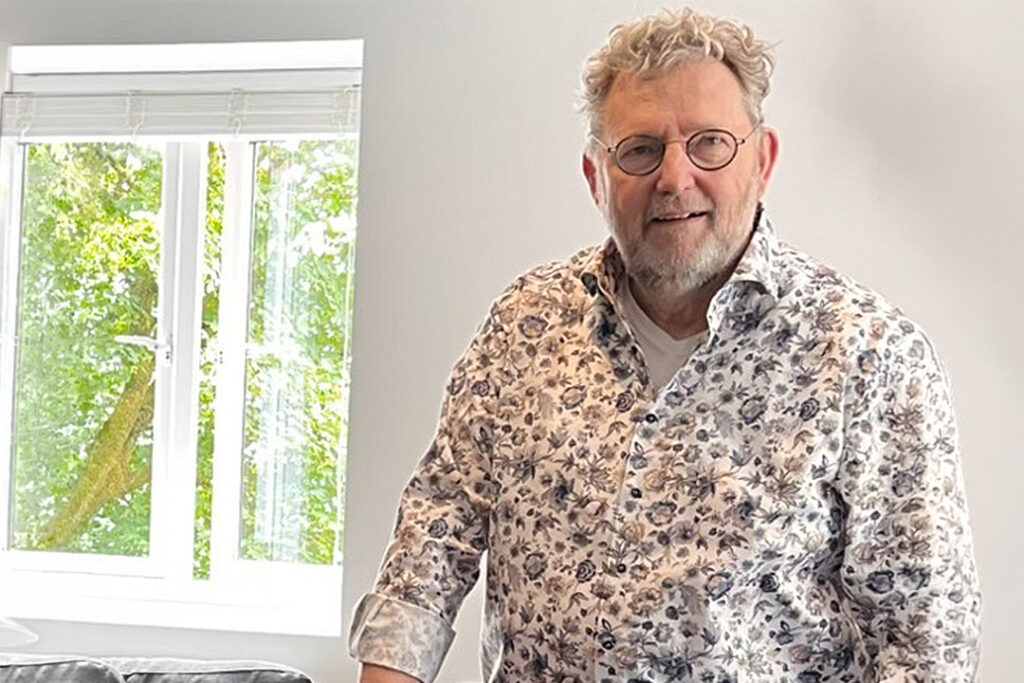
About André
André is a highly respected naturopath, nutritionist and acupuncturist with decades of clinical experience helping thousands of people improve their health and wellbeing. Now retired from practice, he is dedicated to sharing the knowledge and expertise gained throughout his distinguished career with practitioners around the world.
Drawing on his deep understanding of Traditional Chinese Medicine (TCM), nutrition and energetic health, André developed the Energetic Structural Balance (ESB®) method, an innovative approach that integrates biomechanics with energetic principles. His expertise also informed the development of the ESB Allergy programme and allergy ampoules.
Committed to lifelong learning, André has trained in a wide range of therapeutic disciplines, including Bowen Therapy, completing Bowen training in 1996 and 1997.